Diamond, rather than imitation.
Laboratory-grown diamonds are distinct from simulants such as cubic zirconia and moissanite. Simulants may resemble diamond, but are different materials.
THE DIAMOND GUIDE
Understand the details behind the brilliance, from the shape you love to the report that accompanies your stone.
UNDERSTANDING ORIGINS
Natural and laboratory-grown diamonds are both diamonds. Their distinction begins with how they form. Understanding that origin brings clarity to your choice.
| A closer look | Natural diamonds | Laboratory-grown diamonds |
|---|---|---|
| Origin | Form through geological processes within the Earth, over immense periods of time. | Grow in controlled facilities using technology, most commonly High Pressure High Temperature (HPHT) or Chemical Vapor Deposition (CVD). |
| Material & beauty | Crystalline carbon with the characteristic hardness and optical properties of diamond. | Essentially the same chemical composition, crystal structure, and physical and optical properties as natural diamond. |
| Quality | Each stone has its own combination of cut, color, clarity, and carat weight. | Each stone also has its own quality characteristics. Laboratory-grown does not mean flawless or automatically higher quality. |
| Identification | A gemological laboratory can establish natural origin. | Specialist laboratory testing can distinguish laboratory-grown origin; appearance alone is not a reliable test. |
Laboratory-grown diamonds are distinct from simulants such as cubic zirconia and moissanite. Simulants may resemble diamond, but are different materials.
Origin and quality both matter when comparing prices. Review the measurements, grades, and report alongside the quote, rather than assuming that similar-looking stones are equivalent.
Learn more: GIA’s explanation of natural and laboratory-grown diamonds · IGI’s laboratory-grown diamond guide.
THE LE MAISON ROSEMARY APPROACH
Our laboratory-grown diamond offering brings your preferred shape and personal design together with independent documentation. Every stone we offer is IGI certified and accompanied by its certification documentation, so you can review its identity and characteristics with confidence.
01 / THE FOUNDATIONS
Cut, color, clarity, and carat are the four traditional measures of diamond quality. Read them together.
Cut describes craftsmanship and light behavior. Shape is the outline; cut quality is how well the facets and proportions work together.
For the D–Z scale, D–F is colorless and G–J near colorless. Grades continue toward more noticeable yellow or brown. Fancy colors use a different assessment.
Clarity records internal inclusions and surface blemishes at 10× magnification. The scale runs from Flawless and Internally Flawless through VVS, VS, SI, and Included. A grade alone does not tell you what is visible without magnification.
One carat equals 0.2 grams. Carat measures weight, not face-up size: shape and proportions affect how large a diamond appears.
Learn more: IGI’s four Cs guide.
02 / FIND YOUR SILHOUETTE
Explore the principal shapes for your loose stone or custom setting. Ask Rosemary about your preferred proportions and current sourcing options.
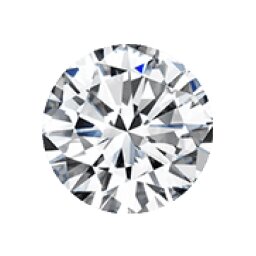
A circular outline with brilliant-style sparkle.
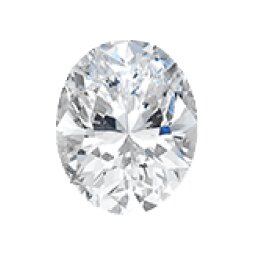
An elongated curve with a graceful presence.
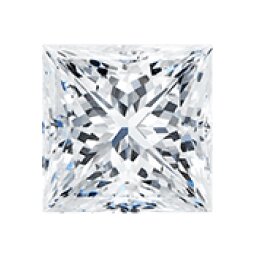
A square outline with pointed corners.
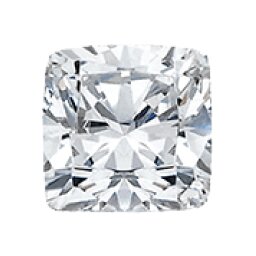
Soft corners; available in square or elongated proportions.
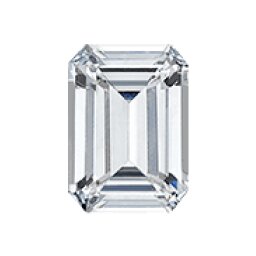
An elongated step cut with clipped corners.
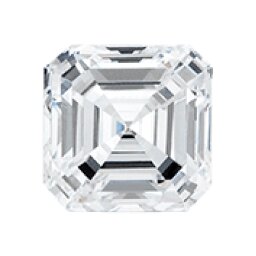
A square step cut with an architectural feel.
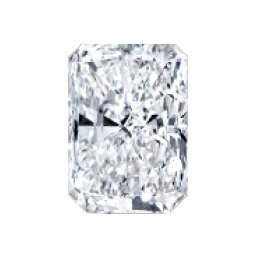
Clipped corners with brilliant-style faceting.
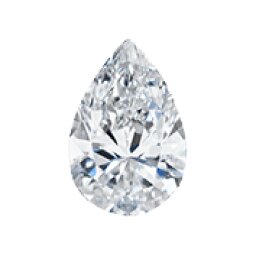
A teardrop outline, rounded at one end and pointed at the other.
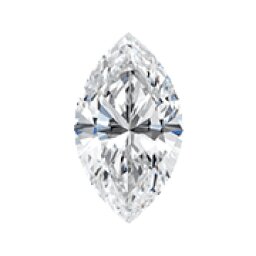
An elongated outline tapering to two points.
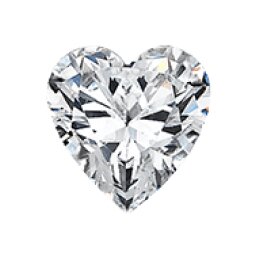
A romantic silhouette with a cleft and a pointed base.
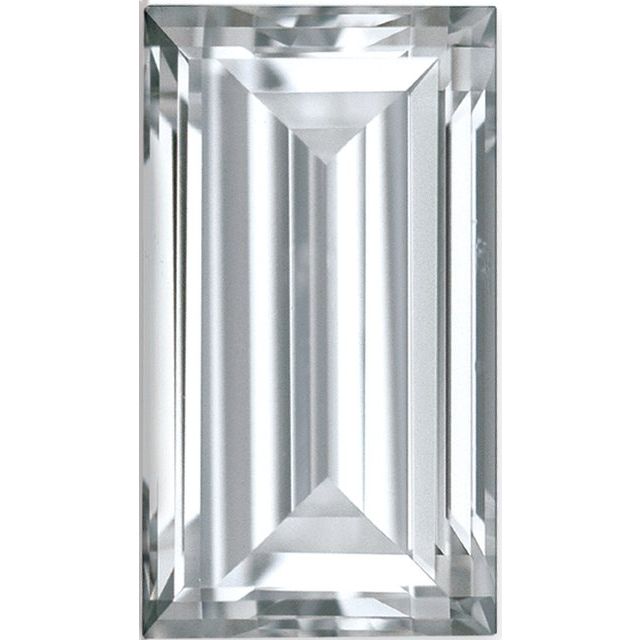
A slender rectangular step cut, often used as an accent.
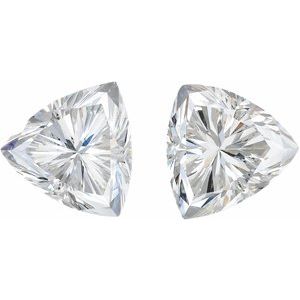
A triangular silhouette with a contemporary character.
Schematic illustrations show typical outlines and facet styles, not actual inventory or exact facet maps. Shape families include many variations; elongated cushions, tapered baguettes, rose cuts, vintage styles, and specialty cuts can also be discussed. Availability is confirmed individually.
03 / UNDERSTANDING PROPORTIONS
The broad, flat facet at the top. Table percentage compares its width with the diamond’s width (average diameter for a round).
The height from table to culet. Depth percentage compares this height with the width (average diameter for a round). Too much depth can hide weight below the face; too little can affect light return.
Table % = table width ÷ diamond width × 100
Depth % = total depth ÷ diamond width × 100
Seek balanced proportions that support bright, even light return and an attractive face-up appearance. For a round brilliant, consider the table and depth together with crown and pavilion angles, girdle, polish, symmetry, and the report’s overall cut assessment.
An emerald cut and a round brilliant should not be judged by the same table and depth targets. Fancy shapes need their own evaluation, including outline, facet pattern, and light return. Neither percentage alone guarantees an Excellent or Ideal result.
Example only: a 3.90 mm depth ÷ 6.50 mm average diameter gives 60% depth. This demonstrates the calculation, not a recommended grade or a universal target.
References: IGI terminology · IGI round brilliant light-performance guidelines.
04 / READING CUT QUALITY
IGI describes its top round brilliant cut category as Excellent–Ideal. Fancy-shape overall cut grades range from Excellent to Poor. Read the terminology on the individual report.
| Grade / designation | How to understand it |
|---|---|
| Excellent–Ideal · round brilliant | IGI’s highest round category; proportions and craftsmanship are assessed together. Check the report for its specific designation. |
| Excellent · fancy shapes | Meets IGI’s requirements for finish, proportions, shape-specific craftsmanship, and light return. |
| Very Good | Small departures from top craftsmanship or light-return standards. |
| Good | More noticeable departures from the top category. |
| Fair / Poor | Increasingly significant shortcomings in finish or light behavior. |
Polish describes surface finish. Symmetry describes alignment and consistency. These are separate grades: “Excellent” polish and symmetry do not automatically establish an Excellent overall cut.
Source: IGI cut-grading methodology and fancy-shape guidelines.
05 / INDEPENDENT DOCUMENTATION
The International Gemological Institute independently examines and documents a stone’s characteristics. The grading report helps you compare diamonds with greater clarity.
Specialist equipment screens for natural diamond, laboratory-grown diamond, or simulant identity.
Gemologists examine color under controlled lighting and clarity at 10× magnification. Independent color opinions are reconciled through agreement.
The report records measurements and applicable quality grades. Read the comments for any growth-method or treatment information. Mounted-stone assessments may be limited by the setting.
Check the report number with IGI. Where a laser inscription is present, a professional can compare it under magnification with the report.
A grading report documents identity and quality; it is not a monetary appraisal or a promise of a particular grade.
Verify an IGI reportSource: IGI laboratory-grown diamond reports.
THE LE MAISON ROSEMARY ASSURANCE
Every stone we offer is IGI certified and accompanied by its certification documentation. A personal choice, supported by independent expertise.
Find your stone with Rosemary